What is an Air Washer used for
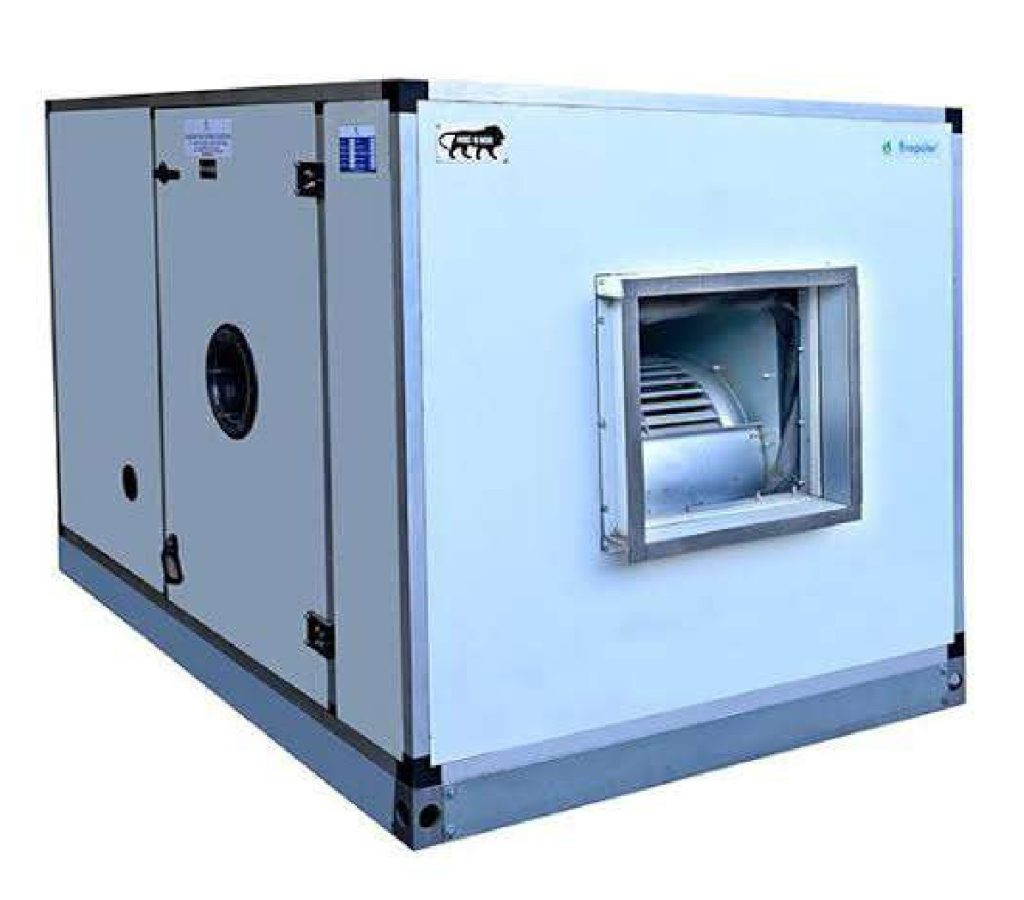
* An air washer is used for air purification, humidification, and cooling. Its primary function is to improve indoor air quality by removing pollutants such as dust, allergens, and odors from the air.
* Air washers are commonly used in industrial and commercial settings such as factories, warehouses, and data centers to improve air quality. Still, they can also be used in residential settings to improve the overall air quality in the home.
* In addition to purifying the air, air washers can also humidify the air by adding moisture to the air. This can help reduce air dryness and alleviate symptoms such as dry skin, sore throat, and coughing.
Features of Air Washer
1. Air Purification: Removes dust, dirt, pollen, and other contaminants from the air.
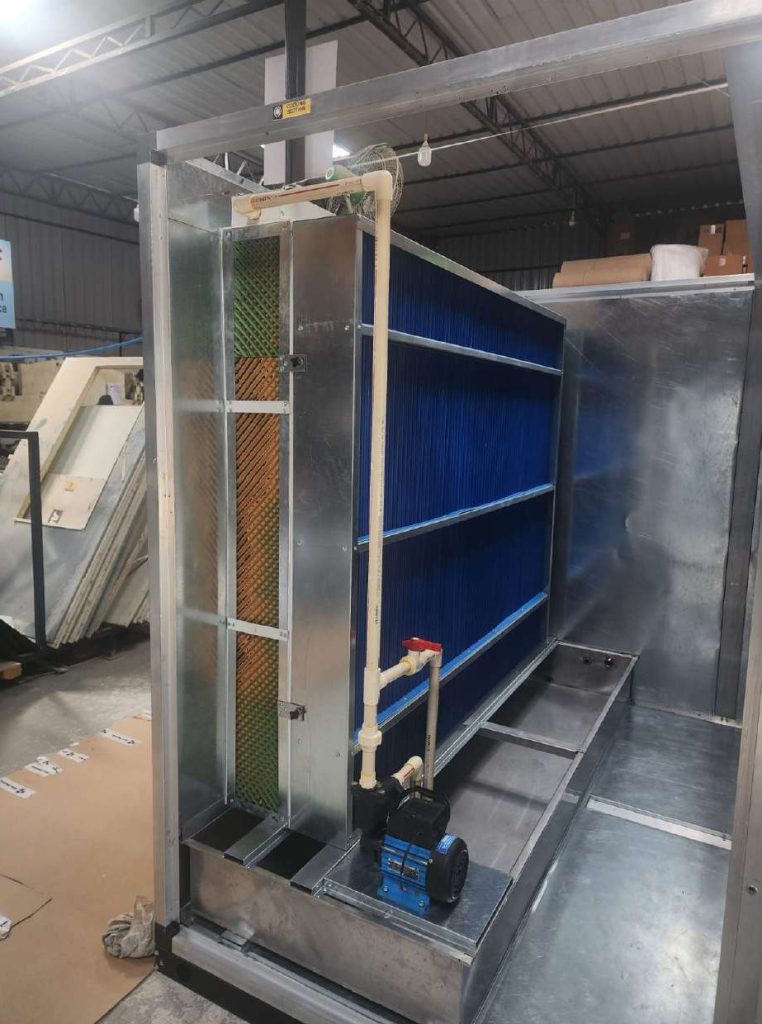
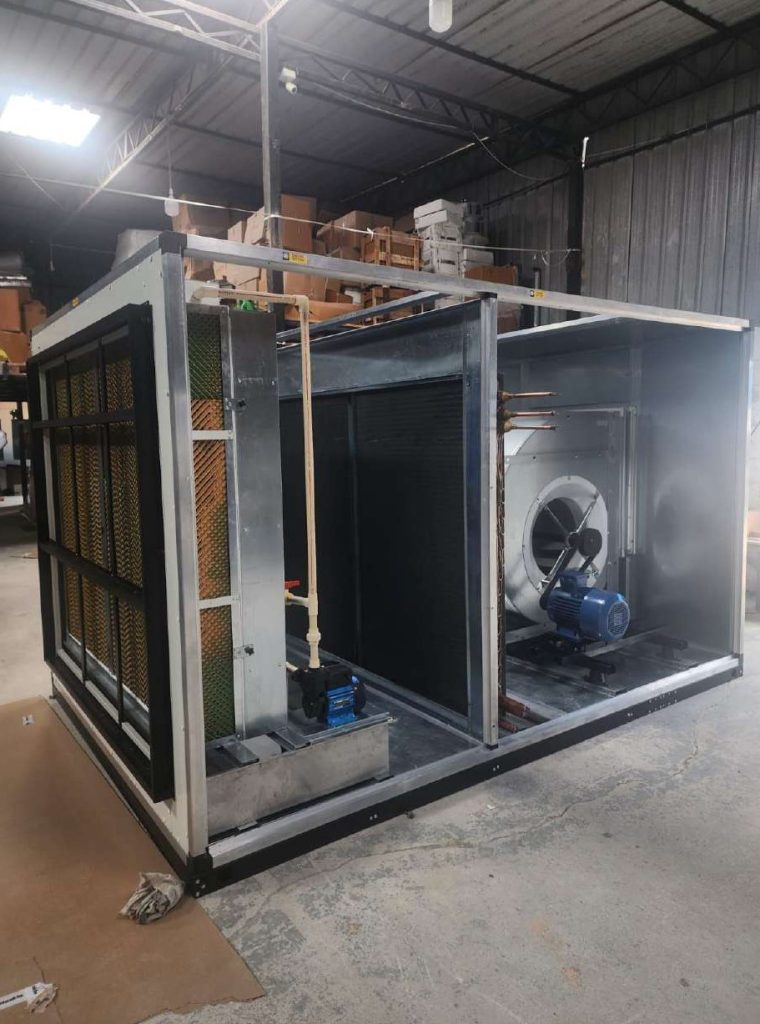
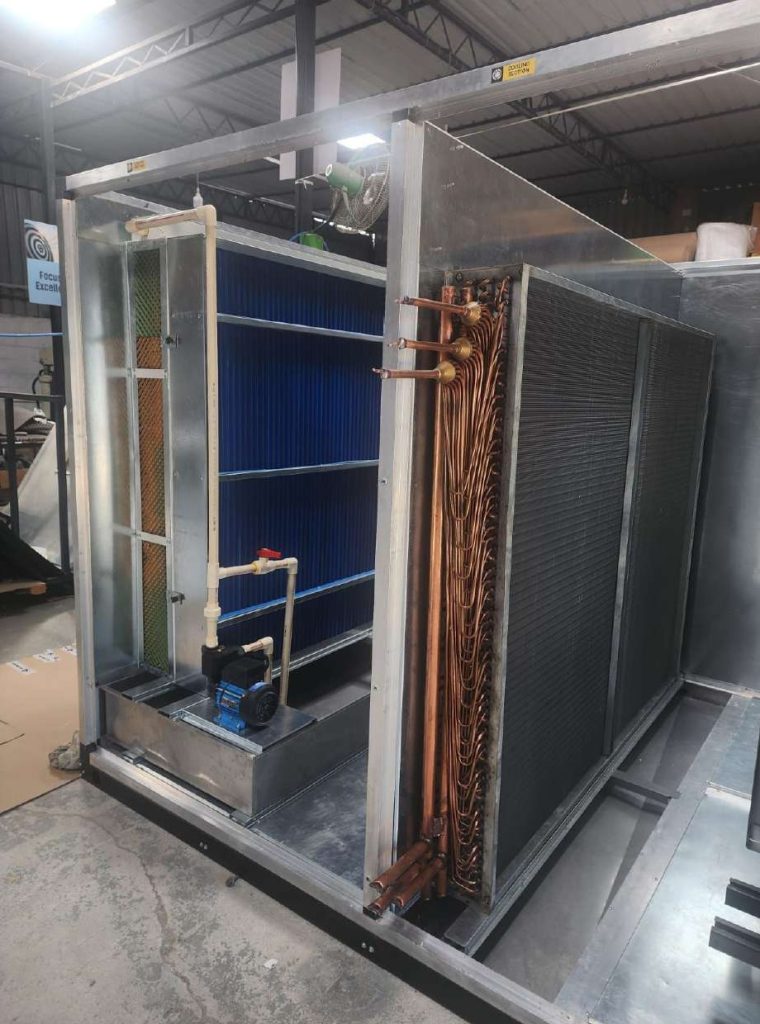
2. Water Spray System: Uses a spray of water to wash away impurities.
3. High-Efficiency Filtration: Can capture particles as small as 1-5 microns.
4. Low Maintenance: Easy to clean and maintain, with minimal replacement parts.
5. Energy Efficiency: Can be more energy-efficient than traditional HVAC systems.
6. Humidity Control: Can help regulate humidity levels in the air.
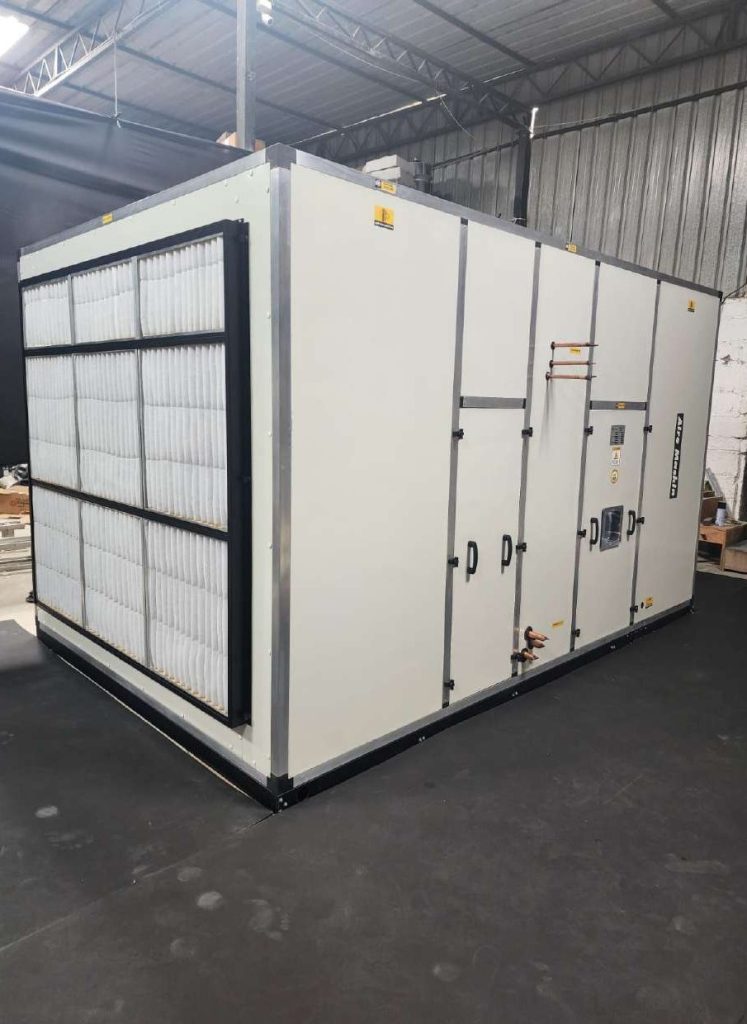
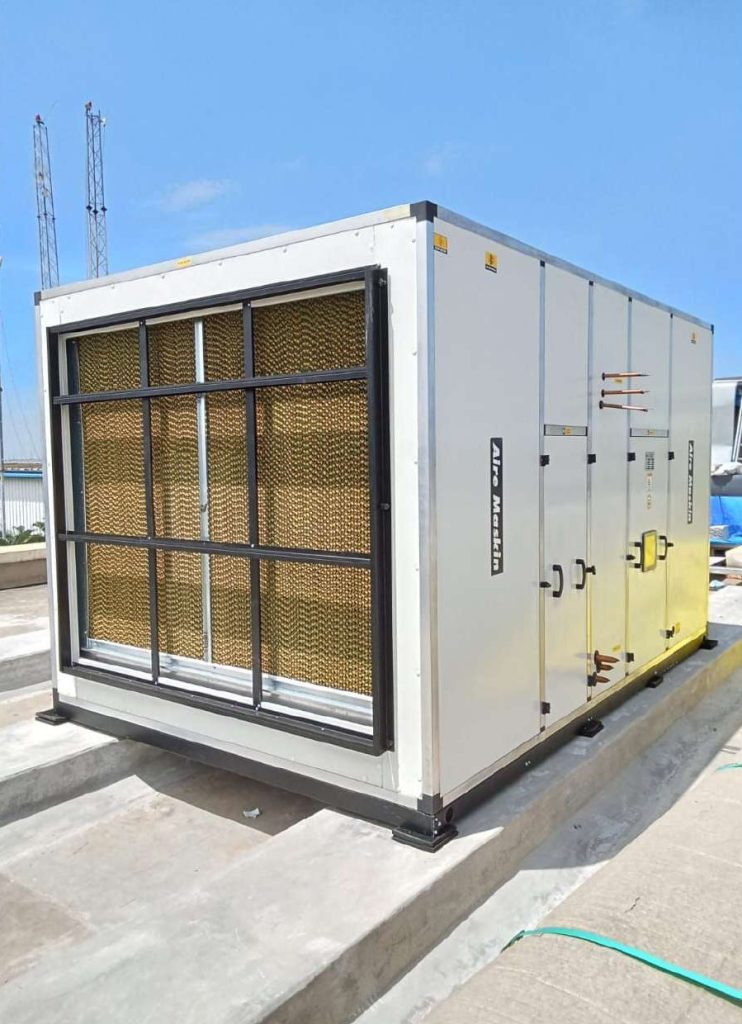
7. Compact Design: Can be installed in a variety of spaces, including industrial facilities and commercial buildings.
8. Customisable: Can be tailored to specific air quality and purification needs.
How Air Washer Works
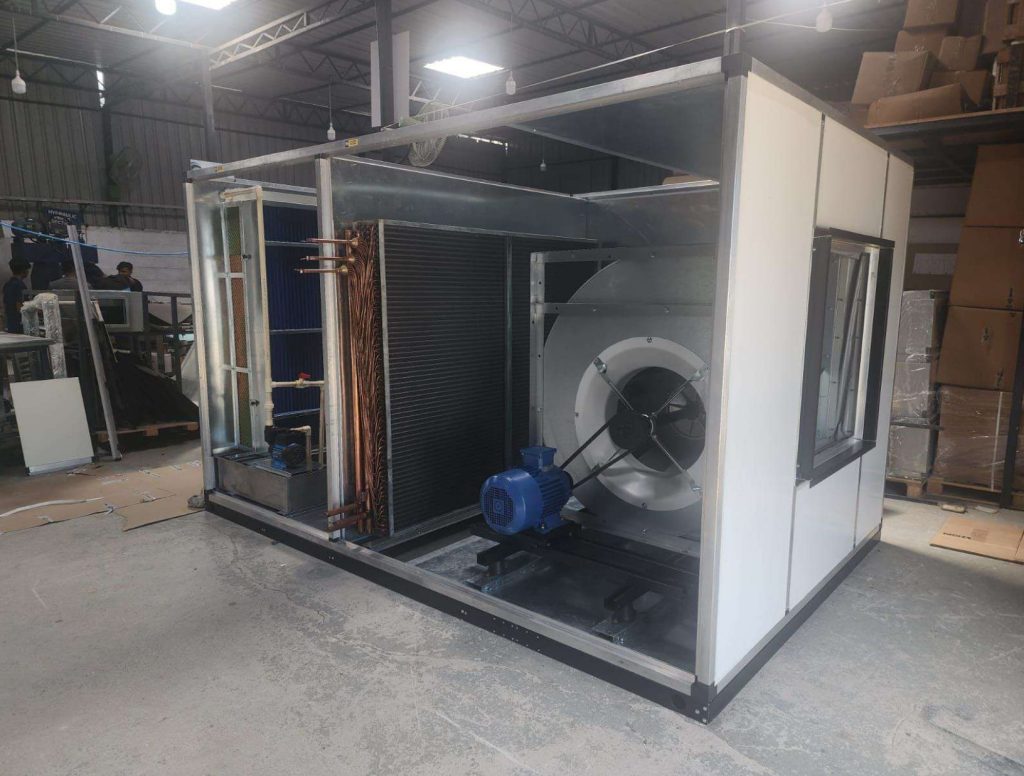
1. Air Intake: Dirty air is drawn into the air washer through an intake duct.
2. Pre-Filtration: Large particles are removed through a pre-filter, protecting the air washer’s internal components.
3. Water Spray: The air then passes through a spray of water, which helps to wash away smaller particles and contaminants.
4. Wet Scrubbing: The air-water mixture then passes through a wet scrubbing section, where remaining impurities are removed.
5. Separation: The clean air is then separated from the water and contaminants through a separation chamber.
6. Drainage: The contaminated water is drained away, often through a drain valve.
7. Clean Air Discharge: The clean air is then discharged, free from impurities and contaminants.
This process helps to remove a wide range of contamination, including dust, dirt, pollen, and other airborne pollutants.